
There’s much more to Hawaiʻi Island than beautiful beaches, dramatic volcanoes, and unforgettable sunsets. The island is also home to an incredible variety of wildlife, from ancient sea turtles and playful dolphins to majestic humpback whales and rare native birds.
One of the best parts of exploring the Big Island is that many wildlife encounters happen naturally. You don’t necessarily need to visit a zoo or wildlife park. A drive along the coast, a morning snorkeling adventure, or a hike through the island’s forests can put you surprisingly close to some of Hawaiʻi’s most fascinating animals.
Here are some of the best places to look for wildlife during your visit.
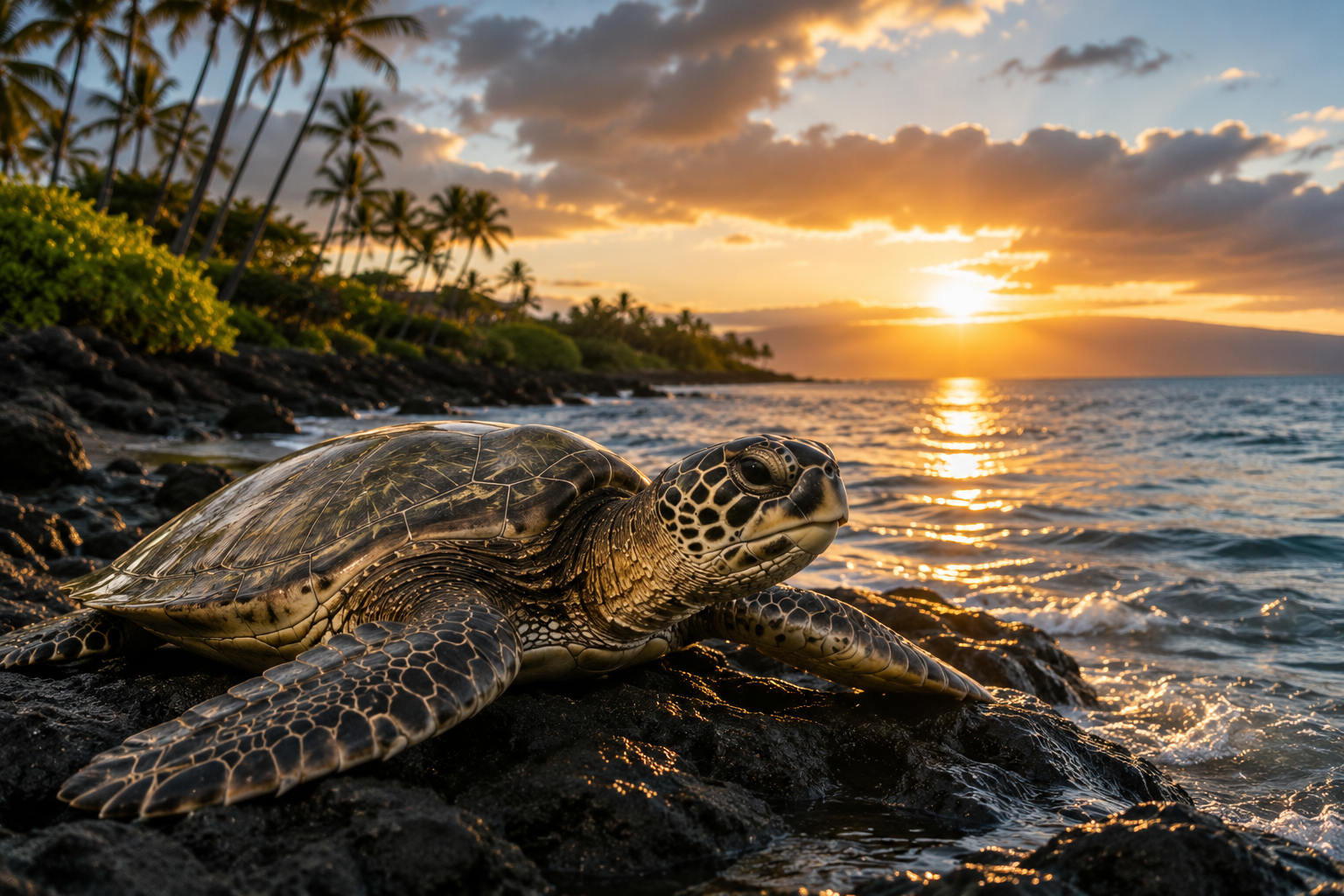
🐢 Hawaiian Green Sea Turtles — Honu
The Hawaiian green sea turtle, or honu, is one of the island’s most iconic residents. These gentle animals can frequently be seen resting on beaches, basking on rocks, or swimming through shallow coastal waters. Some of the best places to look for honu include Kahaluʻu Beach Park near Kailua-Kona, Hōnaunau Bay, and Punaluʻu Black Sand Beach on the southern coast. Punaluʻu is particularly famous for turtles resting along the shoreline. Remember to keep a respectful distance and never touch or feed them.
🐋 Humpback Whales — Koholā
If your trip takes place during whale season, be sure to spend some time watching the ocean. Humpback whales typically visit Hawaiʻi’s waters during the winter months, generally from late November through early May. The Kohala Coast, Kawaihae, and the waters around Hilo Bay can provide opportunities to spot these enormous visitors. Look for the telltale blow of a whale, followed by a tail or, if you’re lucky, a spectacular breach. For an even closer experience, consider booking a whale-watching excursion during the season.
🐬 Spinner Dolphins — Naiʻa
Hawaiʻi Island’s Kona Coast is also home to pods of spinner dolphins, known for their incredible leaps and spins above the water. Kealakekua Bay is one of the island’s best-known areas for dolphin encounters. Early-morning boat tours and snorkeling excursions can provide opportunities to see dolphins traveling through the bay and surrounding waters. While it can be tempting to get close, responsible wildlife viewing means allowing dolphins to choose the distance and direction of the encounter.
🌊 Manta Rays — Kona Coast
Few Big Island wildlife experiences compare to seeing manta rays glide through the water at night. The waters off Kona and Keauhou are internationally known for nighttime manta encounters. These enormous, graceful animals gather in areas where plankton becomes concentrated, creating an incredible feeding spectacle. Guests often watch from boats or specially arranged viewing areas as manta rays effortlessly swim beneath them. Despite their impressive size, manta rays are gentle creatures and pose little threat to swimmers when encountered responsibly.
🪿 Nēnē — Hawaiʻi’s State Bird
The nēnē, or Hawaiian goose, is Hawaiʻi’s official state bird and one of the island’s most special native species. Nēnē can be found in a variety of environments, including volcanic landscapes, grasslands, and higher-elevation areas. Visitors exploring Hawaiʻi Volcanoes National Park and other upland areas may have an opportunity to see them. If you spot one, slow down and give it plenty of room. Nēnē sometimes wander onto roads, so drivers should be especially cautious.
🦇 Hawaiian Hoary Bat — ʻŌpeʻapeʻa
Hawaiʻi Island is also home to one of its more elusive creatures: the Hawaiian hoary bat, known as ʻŌpeʻapeʻa. It is Hawaiʻi’s only native land mammal and can sometimes be seen flying around forests, agricultural areas, and rural landscapes around dusk. Because the bat is nocturnal and relatively elusive, sightings aren’t guaranteed—but keeping an eye on the sky around sunset may pay off.
🐦 Native Forest Birds
For visitors willing to travel into the island’s higher elevations, Hawaiʻi Island offers opportunities to see some of Hawaiʻi’s rare native forest birds. Areas around Mauna Kea, Hakalau Forest National Wildlife Refuge, and other protected upland forests can provide habitat for native species such as the ʻapapane and ʻamakihi. Some areas require special access or reservations, so check ahead before visiting.
🌺 Explore Responsibly
Wildlife encounters are one of the great pleasures of visiting Hawaiʻi Island, but protecting these animals is everyone’s responsibility. When observing wildlife, maintain a safe distance, never feed or touch animals, and avoid chasing or surrounding them. Stay on designated trails and follow posted regulations, particularly in protected areas. Most importantly, bring your camera—but leave the wildlife exactly where you found it. From snorkeling with tropical fish in Kona to spotting a sea turtle on a black-sand beach, watching whales along the Kohala Coast, or searching for native birds in the mountains, Hawaiʻi Island offers an incredible variety of wildlife experiences.
Best Regards
– The Big Island Stays Team